Created by the fans for the fans A Fleeting Glimpse is an online community for all things relating to Pink Floyd and its members, including various long-term collaborators associated with the band.
Preparations for this site commenced in early 1988, and the site was fully established in June 1998 byCol Turner. This site took many thousands of hours to build and has received MULTI MILLIONS of visitors from all over the world.
A Fleeting Glimpse is proud to have been endorsed by many band associates, including Guy Pratt,Dave Kilminster,Chester Kamen,Harry Waters,Durga McBroom,Ian Ritchie,Jay Stapley,Lee Harris, and many more.
If you haven’t visited us before, get set to discover one of the most comprehensive Pink Floyd sites on the internet!
If you have anything Floyd-related that you think may be of interest, drop a line to tony@pinkfloydz.com
You can also follow us for daily updates on our social media platforms Facebook| Instagram | Twitter
We do not receive any funding at all, so donations are most welcome. It does cost money to keep this site going, so even if you donate just $5 it can make a difference. (PLEASE USE THIS LINK TO DONATE) Thank You!
As a convenience to you we are providing these Amazon Links USA | UK We are a participant in the Amazon Services LLC Associates Program, an affiliate advertising program designed to provide a means for us to earn fees by linking to Amazon.com and affiliated sites.
Pink Floyd - A Fleeting GlimpsePosted on by Tony R
What a great surprise this Friday morning! David Gilmour has announced 6 shows at London’s Royal Albert Hall this coming fall to promote his new album Luck and Strangeon the 9, 10, 11, 12, 14 & 15 October 2024. These will be the only UK dates. Tickets will go on general sale at 10am on Friday, 10th May from Ticketmaster.
Fans pre-ordering ‘Luck and Strange’ from the official David Gilmour UK Album Store at davidgilmour.com/rah will be able to participate in an exclusive ticket pre-sale on Thursday, 9th May.
The window to qualify for the pre-sale ends at 3pm on Wednesday, 8th May, with all existing pre-orders from the official David Gilmour UK Album Store also eligible. Tickets will then go on general sale at 10am on Friday, 10th May.
Pink Floyd - A Fleeting GlimpsePosted on by Tony R
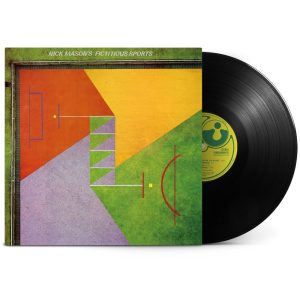
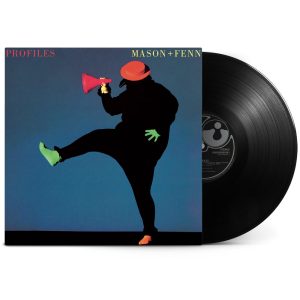
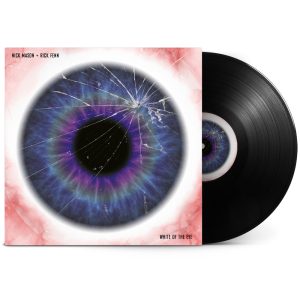
Nick Mason’s solo albums are to be released as individual LPs & CDs for the first time since their original releases. Releasing on June 7th, 2024, are Fictitious Sports, Profiles, and the film soundtrack, White of the Eye. Click to order your copy:
Pink Floyd - A Fleeting GlimpsePosted on by Tony R
We at AFG would like to wish a very happy birthday to acclaimed author and lyricist for Pink Floyd and David Gilmour, Polly Samson. Polly has been happily married to David Gilmour for 29 years and they have a lovely partnership together and a very beautiful family. We wish you the best on your birthday, Polly. We hope you enjoy your day!
Pink Floyd - A Fleeting GlimpsePosted on by Tony R
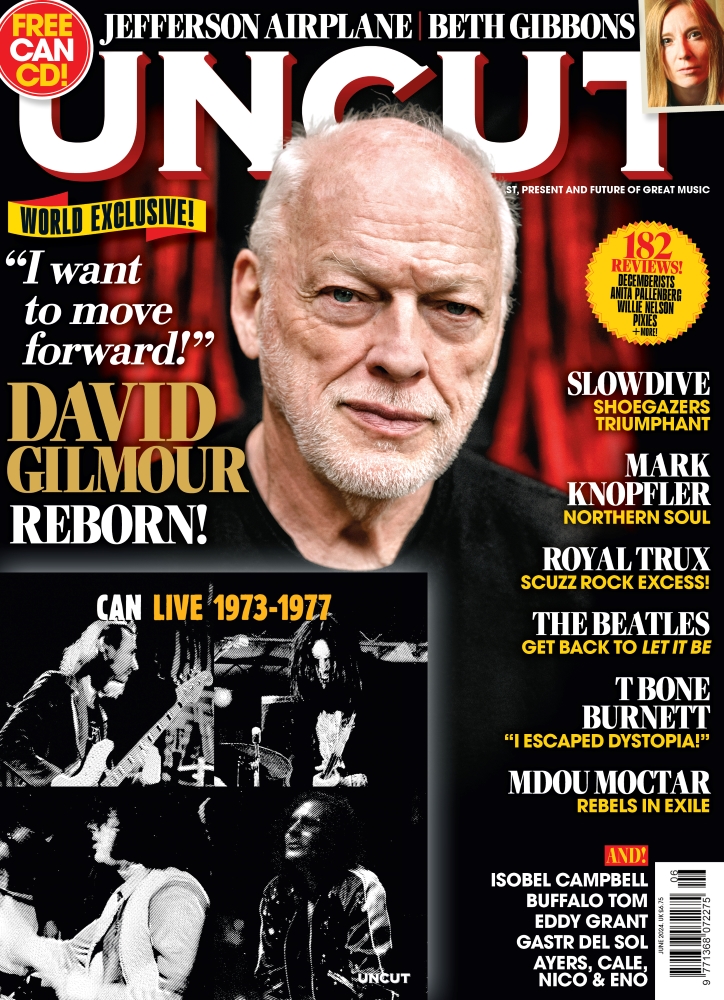
The newest issue of Uncut Magazine (dated June 2024) features an exclusive interview with David Gilmour. This large 12-page feature has David discussing at length his newly announced solo album Luck and Strange and features some great photos taken during the recording of the album. It should make for a fascinating read – it’s surely not one to miss! The magazine hits UK shops today and you can buy online here at the publisher website: https://shop.kelsey.co.uk/single-issue/uncut-magazine/338
Pink Floyd - A Fleeting GlimpsePosted on by Tony R
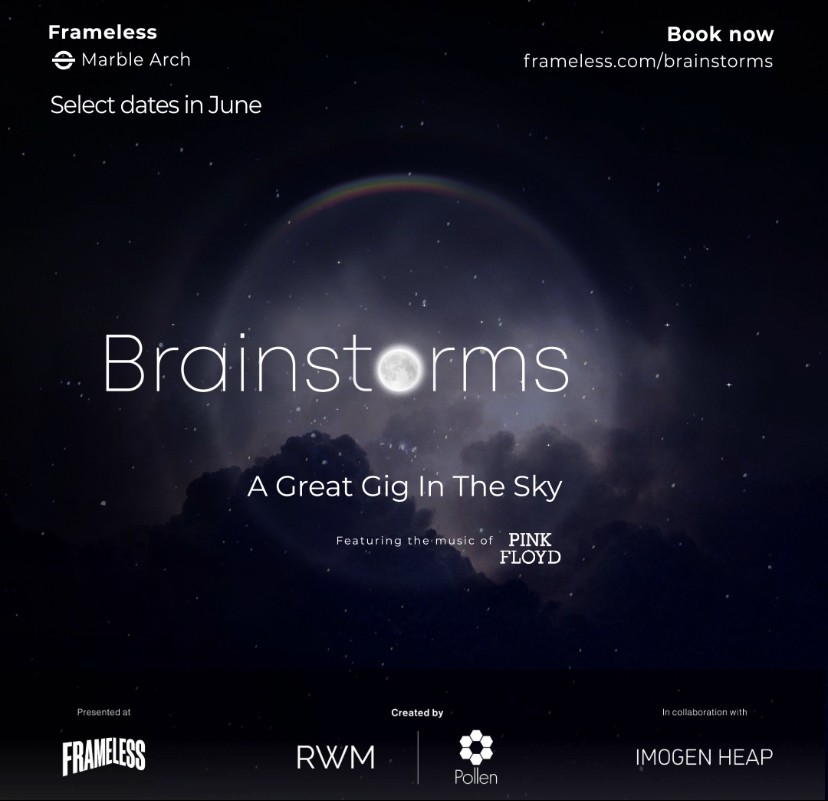
A very special experience blending art, music and neuroscience technology is coming. With the curation and art direction of Gala Wright, daughter of late Pink Floyd keyboardist Richard Wright. The new Friday and Saturday evening residency at Frameless London this June will shine a light on how our minds respond to music, visualized through a new and powerful immersive experience themed around the 1973 Pink Floyd Classic ‘The Great Gig In The Sky.’
This June sees the launch of Brainstorms: A Great Gig In The Sky, presented by the UK’s largest immersive art experience Frameless. A complete takeover of the iconic venue, the never before seen show blends music and art with the latest neuroscience and technology, in an exploration of how our minds respond to music.
The powerful, immersive experience, running on Friday and Saturday evenings in June 2024 for 18+ only, comes from Brainstorms, a joint venture between San Francisco-based creative studio Pollen Music Group and Richard Wright Music Limited. It brings to life the results of the Brainstorms research project that took place last autumn.
Driven by a mutual admiration for the beautiful and haunting simplicity of Pink Floyd keyboardist Richard Wright’s songwriting, the Brainstorms team has themed the experience around the concept behind the iconic Pink Floyd track ‘The Great Gig in the Sky’. A music experience like no other, visitors will travel through the four main Frameless galleries which each feature stunning sky-themed creative visualisations of the human brain’s response to music, from mesmerising cloud formations and mystical auroras to starling murmurations and an eclipse. The whole experience has been designed to communicate how people respond to music, while enhancing the listening experience by enveloping individuals inside the songs like never before.
To create the visuals for the centerpiece experience, 125 individuals had their brain activity recorded while listening in unparalleled clarity and depth through immersive sound Dolby Atmos to 1973 Pink Floyd classic, ‘The Great Gig in the Sky’ from the highly celebrated album ‘The Dark Side of the Moon’. The instrumental track, which was the creation of Richard Wright, features Clare Torry’s voice as an instrument in place of lyrics so was deemed a perfect piece for the largest data collection of its kind. The EEG readings of brain activity, which will be showcased within the experience, were captured at Dolby by the neuroscience experts within the Pollen Music Group team and reflect the participant’s excitement, interest, relaxation and stress felt whilst listening to the track.
Pioneering musician Imogen Heap and her nine-year-old daughter, who took part in the initial brain data capture, will have their pre-recorded brainwaves visualized in the ‘Murmurations’ Gallery, set to her ambient track Cumulus in surround sound. Developed in Unreal, the projected images of swooping and swirling birds will show how the pair’s data sets align as the flocks mirror how the same music can affect different people.
The award-winning Frameless team has provided the perfect real-world stage for the Brainstorms vision, resulting in a world-first, unique immersive experience for the public. Visitors will witness first-hand music’s extraordinary impact on the brain and its power to affect the way we feel by harnessing the technological capabilities of its galleries.
Gala Wright, curator and Artistic director at Brainstorms and daughter of Pink Floyd keyboardist Richard Wright, says, “The visual representation of brain data provides an accessible and intuitive way to see how a piece of music can be a deeply personal yet also powerfully shared experience. Questioning how this is true for my father’s compositions is a key motivation for me bringing this concept to life with Pollen. The added benefit of bringing awareness to his musicality through the Brainstorms project serves to augment his legacy.”
Richard Warp, Pollen composer and Artistic & Technical director at Brainstorms, adds, “Music has a uniquely powerful impact on our mental state, affecting us all in a myriad of ways. Brainstorms: A Great Gig in the Sky seeks to celebrate this while shining a light on the hugely complex physiological processes in our brains as we listen to music.”
A limited number of VIP places will be available to book a unique 15-minute EEG brain capture experience, powered by technology provided by AMD and Emotiv, where they will feel more from the music than ever before as they go on an intense and emotional journey as they listen to five minutes of ‘The Dark Side of the Moon’ in immersive sound Dolby Atmos via headphones. Participants will then be able to see their brain activity visualised into stunning large-scale cloud formations, projected into Frameless’ re-imagined ‘Cloud’ Gallery. Each participant will also receive a personalized memento based on their individual brain’s reaction to the piece.
Located in a 30,000 square-feet venue in the heart of Marble Arch, Frameless is the UK’s largest immersive art experience. Alongside the four immersive galleries, Frameless includes an art-inspired Café Bar and a Gift Shop where official merchandise from the experience will be available to buy.
Cathy Wells, Head of Brand at Frameless Creative, says, “At Frameless, we are committed to supporting world-class innovation within the immersive arena that truly pushes the boundaries. Helping people to connect more with their emotions and feel more through the global language of music, art and culture is at the heart of what we do. We can’t wait to welcome the Brainstorms residency to our galleries, where the public will get to witness first-hand music’s extraordinary impact on the brain and its power to affect the way we feel.”
Tickets to Brainstorms: A Great Gig in the Sky are priced from £30 and tickets go on sale on Friday 26th April at 9am. A strictly limited number of VIP tickets are available that include the brain data capture experience. To buy tickets or to find out more visit https://frameless.com/brainstorms/.
Ticket Prices: World Premiere – Friday 7th June – From £40 8th June and other Friday and Saturday nights in June – From £30 VIP Experience including personal brain data capture and visualization – From £45
Pink Floyd - A Fleeting GlimpsePosted on by Tony R
At last! The official announcement we have all been waiting for! The brand-new album by David Gilmour, ‘Luck and Strange’ was recorded over five months in Brighton and London and is Gilmour’s first album of new material in nine years. The record was produced by David and Charlie Andrew, best known for his work with ALT-J and Marika Hackman, with lyrics mostly written by Polly Samson, Gilmour’s co-writer for the past thirty years.
The album features eight new tracks along with a beautiful reworking of The Montgolfier Brothers’ ‘Between Two Points’, which sees Romany Gilmour, who performs backing vocals across the album, on vocals and harp.
Musicians contributing to the record include Guy Pratt & Tom Herbert on bass, Adam Betts, Steve Gadd and Steve DiStanislao on drums, Rob Gentry & Roger Eno on keyboards and the string and choral arrangements are by Will Gardner. The title track also features the late Pink Floyd keyboard player Richard Wright, recorded in 2007 during a ‘Barn Jam’ at David’s house.
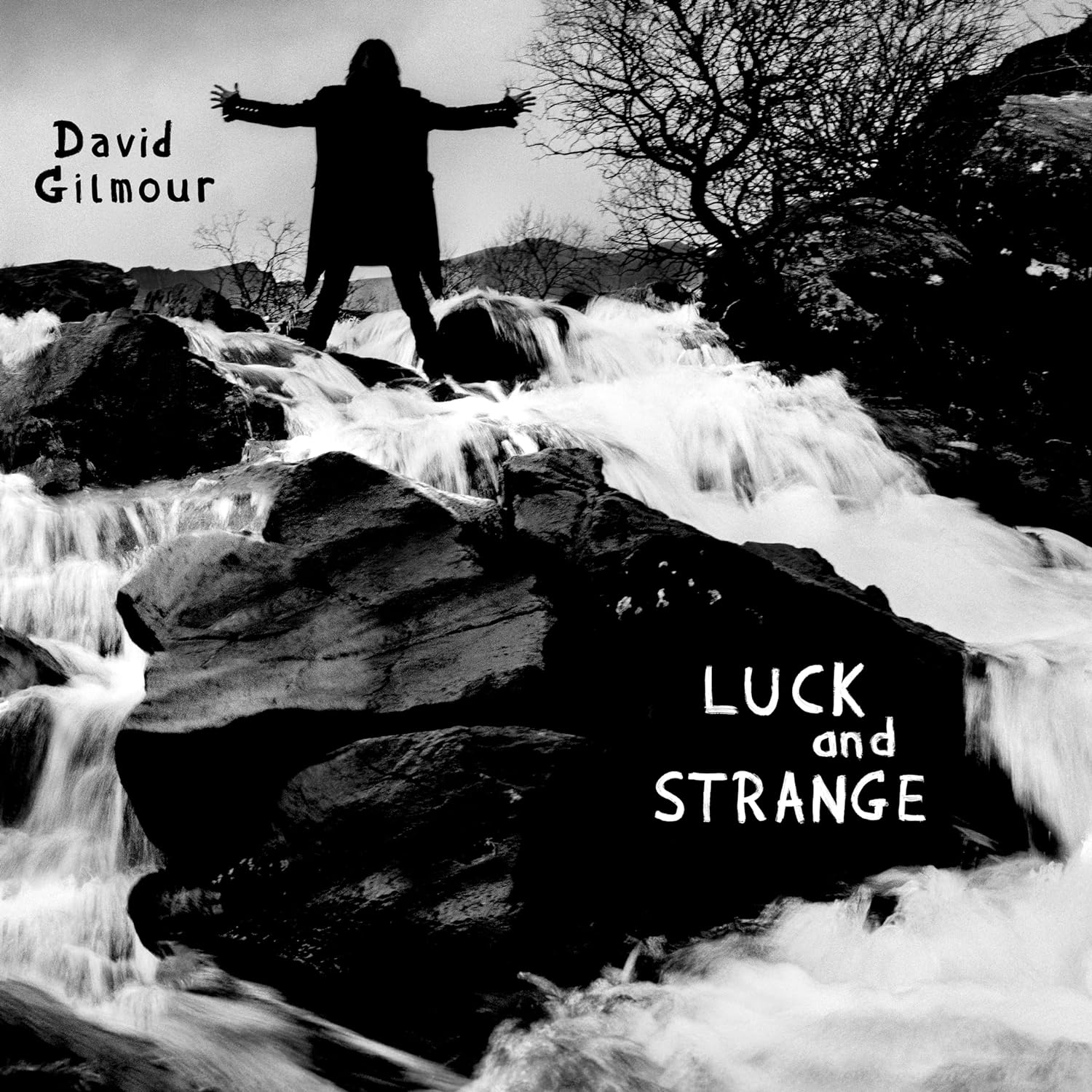
The album’s cover image, photographed and designed by renowned artist Anton Corbijn, is inspired by lyrics written by Charlie Gilmour for the album’s final song ‘Scattered’.
1 x CD – album +2 bonus tracks; Softpak and booklet with photography and design by Anton Corbijn.
Some contributions emerged from the live streams that Gilmour and family performed to a global audience during the lockdowns of 2020 and 2021; Romany Gilmour sings, plays the harp and appears on lead vocals on ‘Between Two Points’. Gabriel Gilmour also sings backing vocals.
The album’s cover image, photographed and designed by Anton Corbijn, is inspired by a lyric written by Charlie Gilmour for the album’s final song ‘Scattered’. Of working with his family on ‘Luck and Strange’, David says, “Polly and I have been writing together for over thirty years and the Von Trapped live streams showed the great blend of Romany’s voice and harp-playing and that led us into a feeling of discarding some of the past that I’d felt bound to and that I could throw those rules out and do whatever I felt like doing, and that has been such a joy.”
‘Luck and Strange’ will be released on 6th September on Sony Music.
TRACKLIST:
1. “Black Cat”
2. “Luck and Strange”
3. “The Piper’s Call”
4. “A Single Spark”
5. “Vita Brevis”
6. “Between Two Points”
7. “Dark and Velvet Nights”
8. “Sings”
9. “Scattered”
Bonus tracks:
10. “Yes, I Have Ghosts”
11. “Luck and Strange (Original Barn Jam)”
Pink Floyd - A Fleeting GlimpsePosted on by Tony R
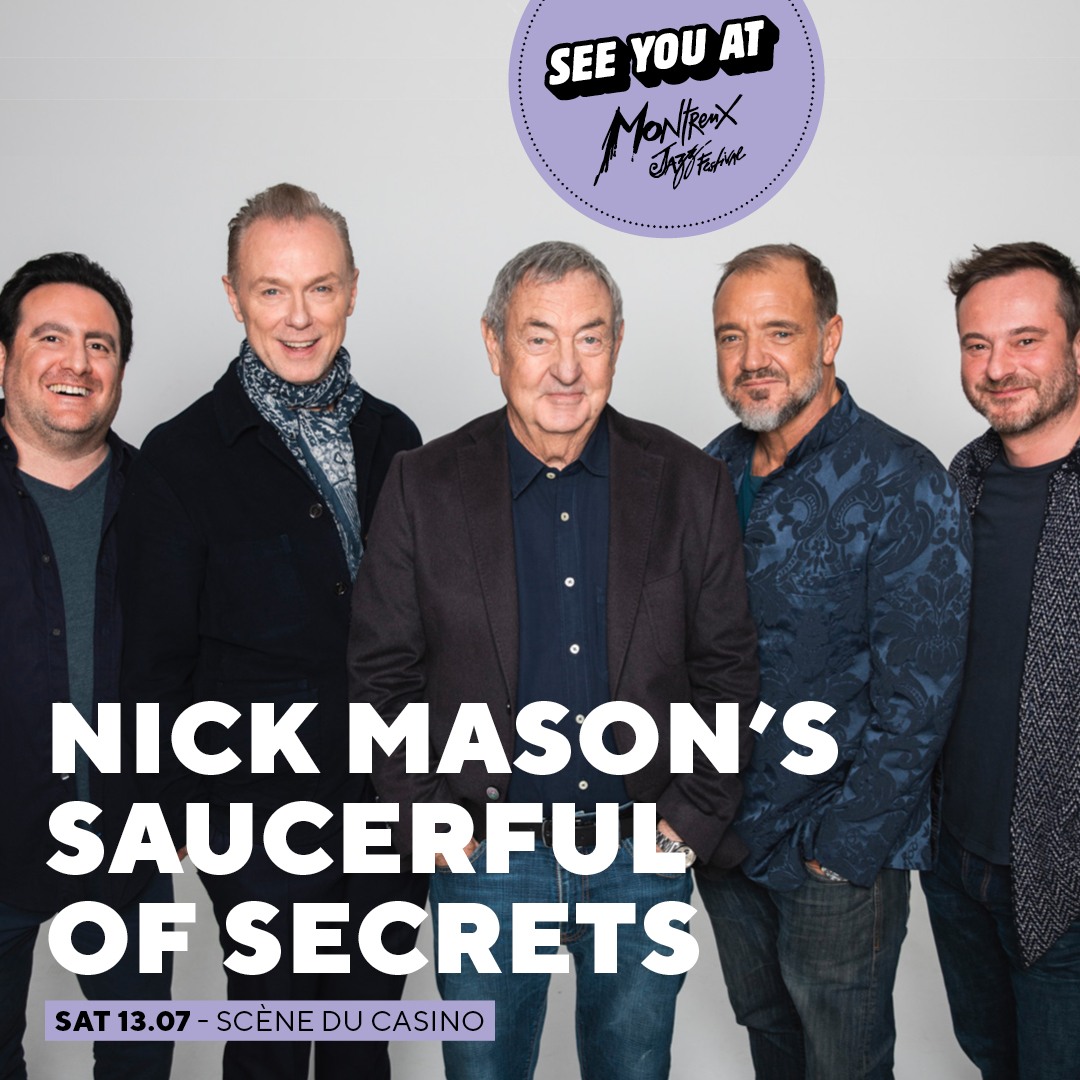
Just announced – the latest date added for Nick Mason’s Saucerful Of Secrets’ 2024 European tour will be held at the legendary Montreux Jazz Festival on July 13th! Tickets go on sale tomorrow and can be bought here: TICKETS


 At last! The official announcement we have all been waiting for! The brand-new album by David Gilmour, ‘
 TRACKLIST: