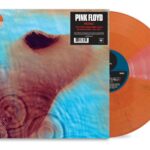
Some of you may recall that, just before Christmas, we unearthed the remarkable story of a Texas man named Pink Floyd, a WWI veteran who lived from 1895 to 1983. That tale has since grown, enriched by newly uncovered newspaper accounts. Yet, astonishingly, our special correspondent Harold Powell has now pushed the mystery even further, revealing that the name Pink Floyd belonged to more men than anyone imagined. The first new trove of articles transports us to South Carolina in 1889, where another Pink Floyd stepped abruptly into the public eye, and into infamy. According to the reports of the day, he was arrested after a violent confrontation that ended with a man’s throat cut. His name appeared in the jail roster alongside thieves, drunks, and desperadoes, a grim catalogue of the era’s offenders. What began as a murder charge was later reduced to manslaughter, and this earlier Pink Floyd ultimately received a three‑year sentence.
But the story doesn’t end there, not even close. Harold has uncovered men named Pink Floyd scattered across South Carolina, Georgia, Florida, New York, North Carolina, and Oklahoma. Some of these records may belong to the same restless soul drifting from state to state, but even with that possibility, the scope of these discoveries is astonishing. Among them is a man who died by suicide, others who stood at altars and married, one who mourned the loss of his brother‑in‑law, and another who proudly hauled in a massive fish that made the local papers. Each fragment adds another layer to this strange, sprawling tapestry of lives lived under the same unforgettable name.
It’s compelling reading, the kind that rewards a slow, curious eye, and we invite you to immerse yourself in these remarkable historical documents.
So there we have it. We remain convinced that Syd Barrett had no knowledge of these other men named Pink Floyd, and that the long‑accepted account still holds true: Syd created the name Pink Floyd by combining the names of two American blues musicians, Pink Anderson and Floyd Council.
Our thanks go once again to Harold Powell, whose many hours of dedicated research made these discoveries possible.